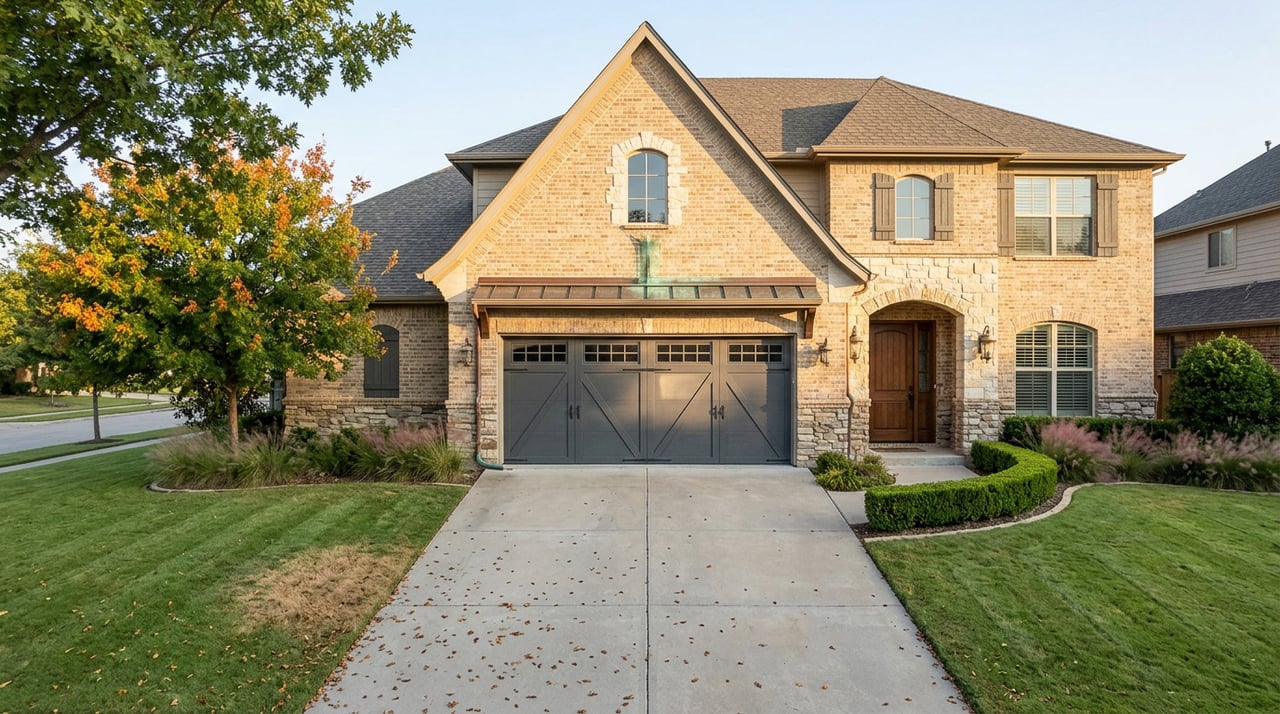
In Frisco New Construction, the List Price Isn't the Whole Bill
September 24, 2026
September 24, 2026
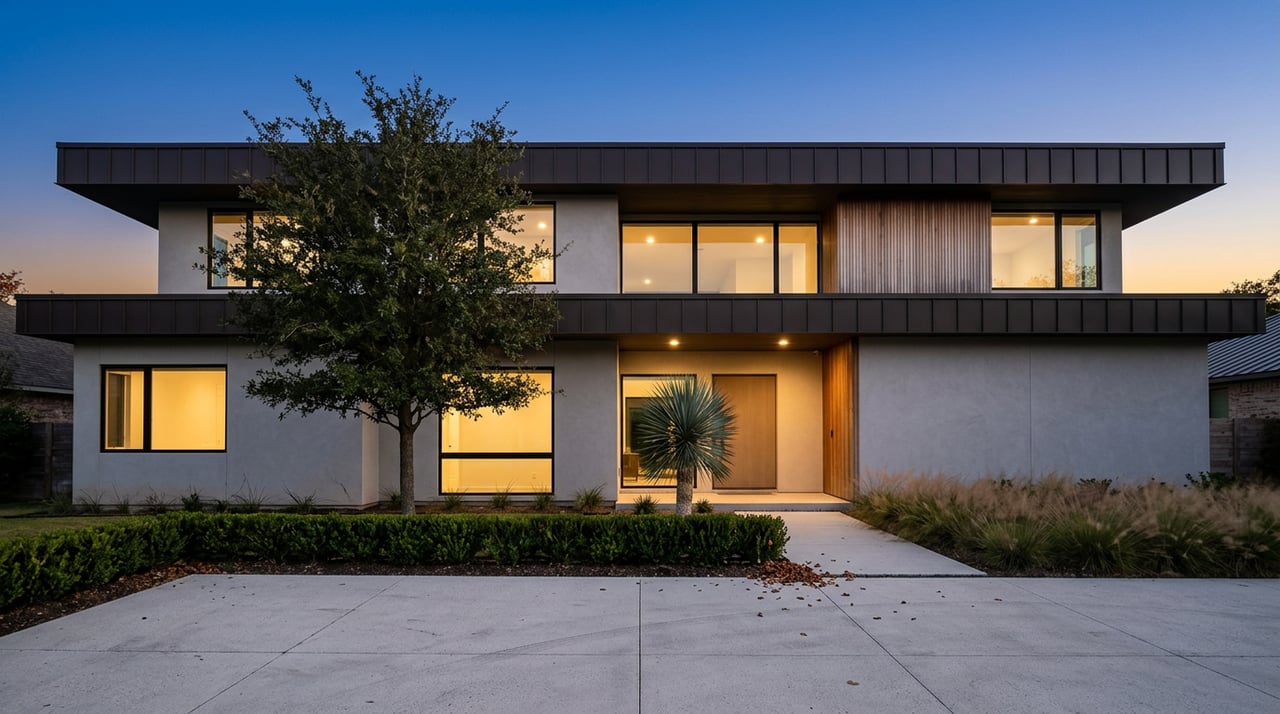
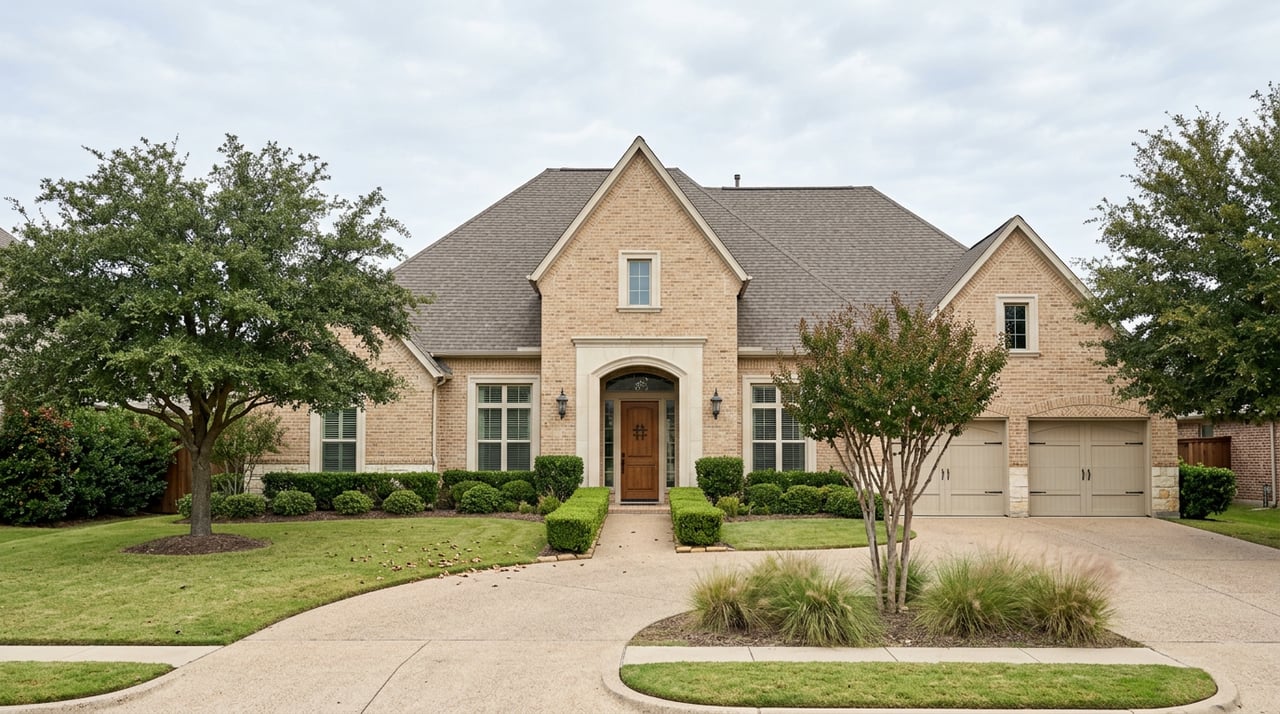
Why would two homes on the same street, from the same builder, listed at the same price, close with mortgage payments that are hundreds of dollars apart?
It happens more often in Frisco than most buyers expect, and the full payment impact can remain unclear through closing, sometimes until an escrow adjustment notice lands in the mailbox a few months later. The gap isn't a builder markup or a lender error. It's the Municipal Utility District tax or Public Improvement District assessment sitting on one lot and not the other, and it's the single line item that online payment calculators are worst at estimating. If you're shopping new construction in Frisco right now, understanding how that line item gets set, where it tends to show up, and what the law requires the builder to tell you before you sign is worth more than another walkthrough of square footage and finish packages.
A MUD is a special taxing district created to fund the water lines, sewer systems, roads, and drainage that a growing subdivision needs before the city has extended its own utilities that far. The district issues bonds to pay for that infrastructure, then homeowners inside the district repay the bonds through an added property tax that shows up on the same bill as your city, county, and school taxes. A PID works differently. Instead of a tax rate, it charges a fixed annual assessment tied to a specific improvement plan, often for parks, streetscapes, or enhanced amenities.
Neither shows up in the listing price. A MUD charge appears on the tax certificate a title company pulls during closing; a PID assessment may appear on the tax bill or a separate assessment bill. Buyers may not see the full $300 to $400 monthly difference until closing.
The city's own numbers make the pattern visible. Frisco's city property tax rate for fiscal year 2026 held flat at $0.425517 per $100 of assessed value, the same rate approved the prior year, and the city council raised the homestead exemption from 15% to 20%, the maximum allowed under Texas law, which the city estimated would save the average homeowner around $120 a year on the city portion of the bill.
That stability is the point. The city's own rate barely moved. What moves is everything layered on top of it depending on which subdivision you're in. Property tax data compiled from Denton County records shows Frisco homeowners in the 75034 ZIP code carrying a median effective rate of 1.54%, compared to 1.48% in 75033, a spread driven by which school district and which local assessment districts sit inside those boundaries. Translated into actual bills, that same data shows annual property tax bills ranging from $9,266 in 75036 up to $12,349 in 75034. That's roughly a $3,000-a-year swing between two ZIP codes in the same city, and the MUD layer itself, where it applies, typically adds another 0.3% to 0.7% on top of the base combined rate in newer sections. At a $600,000 assessed value, that additional percentage alone can mean $150 to $350 a month that never appears on the builder's initial financing sheet.
None of this means Frisco is unusually burdened. It means the "median" the portals advertise is doing a lot of quiet averaging across subdivisions that don't actually share a tax picture.
The places most likely to carry a fresh MUD or PID are the places still being built. Frisco's growth right now is concentrated on the newer edges of the city, including the Fields West community and the area around the city's new Grand Park, a planned 1,011-acre park toward Lake Lewisville where the city broke ground in April 2026 on the first 58-acre phase. Corridors like these are exactly where a developer is most likely to have financed roads and utilities through a MUD, or funded shared amenities through a PID, because the city hasn't yet absorbed those costs into its own infrastructure budget. If you're touring model homes on the newest phase of a Frisco master plan, assume there's a reasonable chance you're inside one of these districts until a document proves otherwise.
Texas law is actually protective here, if you know to use it. Under the Texas Water Code Sections 49.452 and 49.4521, sellers, including builders, are required to provide a Notice to Purchaser before you execute a contract on a home inside a MUD. That notice is supposed to lay out the district's current tax rate and any specific assessments tied to the property. If the notice is missing or incomplete, a buyer typically has the right to terminate the contract.
That's leverage most buyers never use, mostly because they don't know it exists until they're already three weeks into a contract. The better move is to ask for the MUD notice and the PID service and assessment plan the moment you're seriously considering a lot, not after your earnest money is down. A few thousand dollars a year can seem like a minor line item. It rarely is minor once you run it against thirty years of payments.
A few documents and a few minutes on a county website turn a guess into a number:
Is a PID the same thing as an HOA? No. An HOA collects dues for community management and enforces deed restrictions. A PID is a government assessment tied to public infrastructure or amenities, created under state law, and it appears on your tax bill or a separate assessment bill rather than through the homeowners association.
Does every new Frisco neighborhood have one of these? No, and that's exactly why the ZIP-code-level spread exists. Coverage varies subdivision by subdivision depending on when it was developed and how the builder financed the initial infrastructure, which is why the same list price in two different Frisco communities can carry two very different real monthly costs.
The list price gets you in the door. The tax certificate, along with any separate PID assessment bill, tells you what you're actually signing up for. If you're comparing new-construction lots in Frisco, or trying to figure out what a specific subdivision's assessment picture looks like before you fall for a model home, Parthvi Shah can pull the district documents and run the real numbers alongside you. Explore current listings and neighborhood detail on the Frisco page, run your own scenarios with the mortgage calculator, or book an appointment to talk through a specific lot before you write the offer.
This article is general information, not legal, tax or financial advice. Consult a qualified professional about your situation.
Stay up to date on the latest real estate trends.



Your goals shape every step of the process. I provide tailored guidance, strategic insight, and hands-on support to ensure a smooth, confident experience. Every detail is managed with intention, so you can move forward with certainty.